
Sid DeLong on Challenges to Bar Admission Based on Political Activities
Challenges to Bar Admission
Based Upon Protests of the War in Gaza
Sidney W. DeLong
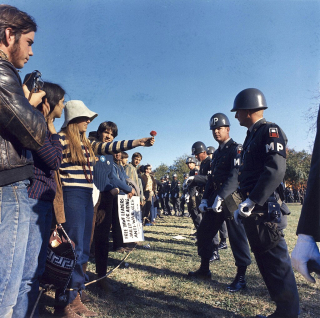
My first semester of law school was in the Fall of 1969, right after Woodstock when, as Dylan intoned “there was Revolution in the air.” One of the many issues sparking a year of non-stop student protest was the Vietnam War. The prospect of being drafted stirred a lot of students’ social consciences. Or, as Dr. Johnson observed: “Depend upon it sir, when a man knows he is to hanged in a fortnight, it concentrates his mind wonderfully.” My deferment from the draft was to expire the following summer when my lottery number came up and I think it did tend to give me focus on the law relevant to draft avoidance and evasion.
My performance on my first research project was decidedly not praiseworthy. Although I distinguished myself by using the correct Blue Book form for citing to state court rules, I missed the controlling Supreme Court authority on whether Morris had forfeited his citizenship, Afroyim v. Rusk, 387 U.S. 253 (1967). I suspect that I should to have found out whether, under the Immigration and Nationality Act, Morris effectively renounced his U.S. citizenship when he took the Canadian Oath of Allegiance to the Queen. Hindsight is my strong point.
I may not have distinguished myself in researching the issue, but I think I got the message Professor Abel was hoping I would find, a typical one for Yale Law School. The Realist lesson of that first assignment was that bar admission is a matter of politics, not law. “Character and fitness to practice” are whatever a bar association committee says they are, only vaguely limited by the Supreme Court’s vacillating discretion to exercise its First and Fourteenth Amendment jurisprudence. At the height of McCarthyism, SCOTUS went both ways on whether being a member of the Communist Party justified denial. During the Civil Rights Era, an applicant’s civil disobedience involving violations of laws enforcing segregation was disqualifying for some bar associations. Violent protests against the war in Vietnam were disqualifying in some states, as was draft evasion.
Character and fitness to practice law are classic questions of subjective judgment that will reflect the political commitments of the membership of state bar associations. Reported judicial decisions reviewing such cases are almost worthless as precedent because they are so fact-intensive. Changes in national political winds often presage new forms of disqualification.
Contemporary character and fitness committees continue to apply their views on whether expressions and activities that do not violate the law and are protected under the First Amendment may nevertheless disqualify one from practicing law. Thus, in some states outspoken white supremacists have been denied admission. In Re Hale, 723 N.E.2d 206 (Ill. 1999).
Which leads us to the prediction of this post: Students and others protesting Israel’s conduct of the war in Gaza have been declared to be antisemitic, even absent expressions of hatred of Jewish people and even though the people engaging in them deny any antisemitic intention. Depending on the political composition of the state bar associations, before some character and fitness committees, antisemitism defined in this way will be deemed to render an applicant unfit to practice law.
In other states, students protesting Hamas may be declared to be anti-Muslim or racist depending on the forms their protests take. Depending on the political composition of the state bar association, this may be sufficient to render the protestors unfit to practice law in those states.
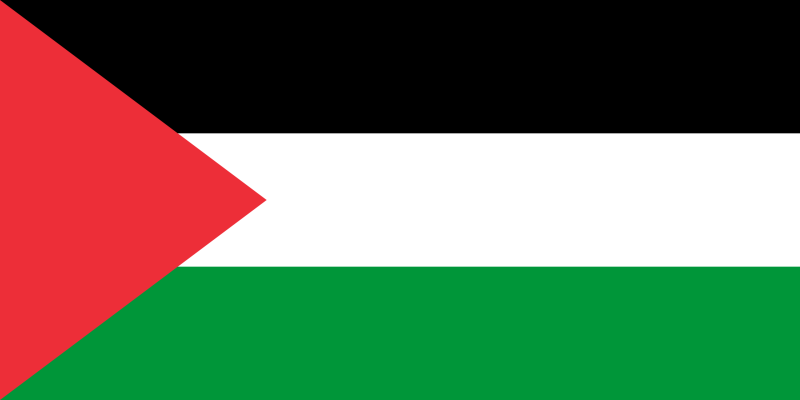
When state bar associations construe their power to control admission to the practice of law to prevent not only law breakers but also those who express views with which the memberships disagree, such as communism in the 1950’s or desegregation in the 1960’s, they have as much discretion as the United States Supreme Court will give them. The reader’s guess about that is better than mine, but I think the issue is looming.
Law students who have been actively engaged in protesting the war in Gaza should anticipate that they may not be able to be admitted in all states and should research this question upon graduating.