
Reviewing Larry DiMatteo, Principles of Contract Law and Theory, Part VIII
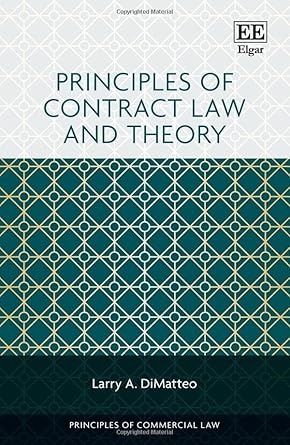
This is the eighth post in my series on Larry Di Matteo‘s Principles of Contract Law and Theory (Principles). The aim is to call some attention to this book while using it to stimulate my thinking as I once again consider how to teach contracts law to first-year students. Principles is a scholarly textbook addressing advanced topics at a very high level of sophistication.
In this chapter, Professor DiMatteo focuses on the divide between formalist (a/k/a literalist or textualist) and contextual approaches to interpretation. He addresses sociological takes on contracts interpretation in Chapters 13 and 14. He begins by usefully distinguishing interpretation, construction, and rectification. (184-85) As he describes it, construction is contextual, but he discusses canons of construction later in the chapter (207-08), and these canons are arguably both part of construction and formalist. Rectification is a rather narrow part of the package, applying only when a court is empowered to correct some error that would lead to an outcome inconsistent with the clear intent of the parties.
The clear theme of the chapter is that contextualism has won out over formalism. As Professor DiMatteo puts it, with refreshing candor: “The plain-meaning rule is fatally defective becasuse a writing cannot be sensibly interpreted without regard to the context in which it was written, and disputed contract language is almost never unambiguous.” (183) The heroes of the chapter are, on the American side, Holmes, Cardozo, Traynor, Corbin, and Llewellyn, and on the UK side, Lord Steyn, Lord Wilberforce, and Lord Hoffman. Professor DiMatteo also sprinkles in some lovely quotations about the inability of language to convey stable meaning. Overall, one is left with the impression that, under the sway of the Restatement (2d) of Contracts and the U.C.C., contextualism routed formalism more thoroughly in the United States than it did in the UK. But elements of formalism remain in our strange attachment to the Statute of Frauds and in the continued adherence to the Willistonian version of the parol evidence rule in some jurisdictions on this side of the pond.
The first post in this series can be found here
Part II is here.
Part III is here.
Part IV is here.
Part V is here.
Part VI is here.
Part VII is here.