
Supreme Judicial Court of Massachusetts Weighs in on Handshake Agreement

The concerns related to Mr. Gattineri’s claim that he purchased a 12% interest in FBT from one Charles Lightbody. Records suggested deception about when the purchase had occurred. Moreover, it seemed that Mr. Gattineri had not paid the full amount that he owed Mr. Lightbody, creating the possibility that Mr. Lightbody retained an interest in FBT. Mr. Lightbody was a convicted felon with ties to organized crime.
Under pressure from the Commission, the parties re-priced the property deal at $35 million, apparently representing the value of the property if it were not used as a casino. The three publicly-known members of FBT had to certify that they would be the exclusive recipients of the proceeds of the transaction.
Mr. Gattineri initially refused to sign the certification, but he was persuaded to do when Wynn vice-president Robert DeSilvio met with him in San Diego and orally agreed that Wynn would make Mr. Gattineri whole by paying him $19 million, representing his share of the $40 million difference between the original sale price and the reduced price (the San Diego Agreement). He signed the certification, but Wynn never paid him the $19 million allegedly promised, so he sued in federal court.
In Gattineri v. Wynn MA, LLC, the First Circuit certified the following two questions to the Supreme Judicial Court of Massachusetts
- “Is the San Diego Agreement unenforceable because it violates [§] 21 of the Gaming Act?”
- “If not, is the San Diego Agreement unenforceable for reasons of public policy of ensuring public confidence in the integrity of the gaming licensing process and in the strict oversight of all gaming establishments through a rigorous regulatory scheme?”
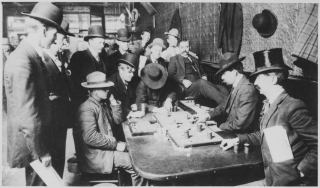
The court provides a detailed discussion of the balance it seeks to effect between principles of freedom of contract and the public policy interest at issue. Massachusetts legalized gambling with some reluctance, noting that there are pitfalls inherent in the introduction of large gambling establishments into the state. It thus empowered administrative agencies to strictly regulate the gaming industry. In order to fulfill its oversight function, the Commission had to be made aware of all transactions relating to the property deal between Wynn and GBT. It was not informed of the alleged side deal between Wynn and Mr. Gattineri. The enforcement of that deal would thus violate public policy, not only because it was concealed from the Commission but because the terms of the deal were “inconsistent with the publicly disclosed terms and conditions upon which the sale of the FBT property had been approved.”
There was a side issue involving an allegation that the Commission had engaged in an unlawful taking by forcing the sale price down from $75 million to $35 million. That issue was not relevant to Mr. Gattineri’s case for breach of contract. The taking affected FBT, and FBT had brought its own action alleging a taking.
Ultimately, the court saw no reason to answer the first certified question, finding that its answer to the second question decided the case: “An agreement, concealed from the commission empowered to review and approve casino licenses, and inconsistent with the terms presented to, and approved by, the commission to address its concerns about the possible involvement of organized crime, is unenforceable as a violation of public policy.”