
Politicians Can Do Quid Pro Quo Deals, Can Naval Officers?
Last term, SCOTUS decided two cases involving political corruption. In Ciminelli v. United States, the Court rejected New York’s right of control theory as a tool in fighting corruption in government bid practices, as we discussed here and here. In Percoco v. United States, the Court reversed and remanded a conviction for violation of the federal “honest services” statute because jury instructions in the case were too vague. This builds on a line of cases going back to the Bridgegate case in which SCOTUS has made it increasingly difficult to prosecute political corruption.
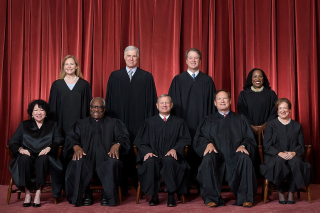
Really? I wouldn’t accept a $100 Starbucks gift card from a student. Why would a politician accept a $100 Starbucks gift card from a constituent to whom he is steering a contract if not as a bribe? There might be nothing nefarious going on, but that is a matter of determining intent, a feat that is not beyond the capabilities of courts. It’s just weird that the Justices have a hard time recognizing corruption when it’s staring them in the face. It’s almost as if one of them had accepted gifts that raised questions about their ability to remain neutral when the interests of the gift-giver are implicated in pending matters.
Last week’s New York Times brings a story from Michael Levenson about the arrest of a retired naval officer based on allegations that seem quite similar to those in Snyder. According to the Times, Robert Burke, once the second highest-ranking officer in the Navy, steered a government contract worth hundreds of millions of dollars to a company in exchange for a position with that company that guaranteed him a salary of $500,000 plus 100,000 stock options. If the transaction in Snyder is held to be a gratuity rather than a bribe, this seems more gratuity than bribe. Admiral Burke and his alleged co-conspirators have nonetheless been charged with bribery and conspiracy to commit bribery. If the arrest leads to a conviction, it will be interesting to see if SCOTUS keeps up its string of standing up for officials accused of corruption.