
Weekend Frivolity: Cycling and Situational Ethics in Oklahoma

For those new to the site, Weekend Frivolity is for lighter stuff, or just stuff which may or may not have any contracts content. I think there are a few intersections between the musings that follow and contracts law, but I will not specify them in the post.
I was on a bicycle ride yesterday morning when I saw a car coming my way. As it passed, I noticed that there was something on the hood of the car on the driver’s side, and after it passed it dawned on me that that something was a woman’s handbag or purse. I was a bit slow to realize what I was seeing. I recently read about a fad in the 1980s among orcas of wearing dead salmon on their heads like hats. My first thought upon seeing a bag perched atop an SUV was “Orcas.”
When I came to my senses, I turned my bike around thinking I might pursue the car and warn the driver, but she had a lead on me, the speed limit was 25 mph, and the road was slightly uphill. Just as I was calculating my slim chances of catching the car, I saw another car approach, and I flagged it down. I told the driver of my concern. He asked, “That car up there?” I said, “Yeah, I don’t know if you can catch her, but you’ve got a better chance than I do.” “Yessir!” he said, as he threw his car into reverse and headed off on his new task.
I don’t know how the story ends. I had done what I could to help. All that remained was curiosity, and rather than sate it, I heeded the call of the ride.
This is what Oklahomans tell me is Oklahoma at its best. People look out for one another. But where do I, as a transplant, fit in?
I moved here from Valparaiso, Indiana. Back in Valparaiso, my friend David and I were walking a circuit along the main drag of our small city arguing about whether moral truths exist, as one does. I was anti; he was pro. As we were walking, I noticed something fall from the hand or pocket of a man walking ahead of us. When we came up to the spot, I saw that what he had dropped was a credit card. I picked it up and ran after its owner. I haled him and said something like, “I think you dropped this” while holding out the card. He looked puzzled, and then a look of recognition and self-reproach came over his face. He took the card, muttering, “I guess I did,” and his friends all teased him. To be honest, I thought a “thanks,” was in order, but I consoled myself that the deed had its own rewards.
Not so. When I jogged back to David so that we could resume our peripatetic conversation, he was grinning. He had caught me engaging in a moral act. “Why did you do that?” he gotchaed. “It’s just how I was raised,” I answered irritably. I did not enjoy having my conduct held up as evidence of moral truths. I explained that it cost me nothing to return the card to its owner, but it would have really ruined his day if he had lost his card. Why do nothing when you could effortlessly do something and save someone a lot of trouble?
That is my ethical position, but it is not THE ethical position. Often we can’t help, and so it’s hard to know when to act and when to abstain. What of the poor good Samaritan whom I flagged down? What obligations did I saddle him with? How do you communicate to another driver up ahead of you that she left her purse on top of her car? If he did not catch up with her and the purse fell into the street, does he then have to pick it up rifle through it for some useful form of identification and try to track her down? I really didn’t think through all of the consequences of my act of getting this stranger involved in something that really wasn’t his problem.
There was a time back in Valparaiso when, again riding my bicycle, I came upon a cell phone in the street. I imagined that the driver had been in the nearby pharmacy, had come out with bags and kids in tow, had placed her cellphone on top of her car so that she could free her hands to unlock her car and load it up. Then, she drove off without retrieving her phone. It then fell into the street when she turned. I’m not sure why, but I was able to get into her call history and started calling numbers to see if anyone could contact the owner and have her come pick up her phone. The first person I reached was confused. “What do you want from me?” she asked. I explained that I was hoping that she could help me track down the owner. “But why do you think I can help you?” I told her that hers was the last number the owner had called before she lost her phone. “Well, I can’t help you.” Both participants in that phone call were confused and annoyed. Eventually, I think I connected with a mother-in-law, who eventually sent her son to retrieve the phone, and he confirmed my hypothesis about how the phone ended up in the street.
Moral of the story? Connecting the phone with its owner took a chunk out of my day. What motivated me? Sunk costs? Of all the people I encountered in this episode, only the mother-in-law seemed to grasp the situation and understand why I was calling. The husband seemed more focused on being amused at his wife’s mistake.

Ultimately, I am agnostic about the existence of absolute moral truths; I am only confident that we either cannot know them or can never be certain that we know them. And given the limits of the knowable, there is no basis to behave as though one possesses something that is unobtainable, perhaps because it doesn’t exist. Sometimes I forget that this is my belief, or I don’t act on that belief. At such times, I am a self-righteous a-hole. But when I remember my beliefs and act in accordance with them, I find it much easier to live with people who have come to believe other things.
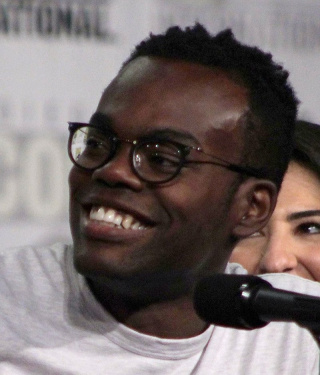
These reflections make me think I ought to read Scanlon’s What We Owe to Each Other. But that’s what I thought when I listened to Chidi Anagonye (above left, sort of) talk about it, and if Chidi couldn’t get me to read it, I don’t know if my bike ride ruminations will do the trick.