
Force Majeure Clause Litigated in South Texas
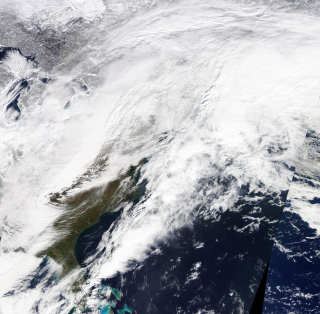
LNG Americas., Inc., formerly Cailip Gas Marketing, LLC, (LNG) brought a breach-of-contract action against Chevron Natural Gas, a division of Chevron U.S.A., Inc. (Chevron). The claim arose in connection with a contract obligating Chevron to deliver 90,000 million British Thermal Units (MMbtus) of natural gas each day to Katy, Texas. In February, 2021, Chevron, citing “unprecedented low temperatures causing freezing or failure of wells, plants or lines of pipe” caused by Winter Storm Uri (pictured, right) did not deliver 628,913 MMbtus. Chevron invoked the contract’s force majeure clause.
In April of this year, the U.S. District Court for the Southern District of Texas granted summary judgement to Chevron in LNG Americas, Inc. v. Chevron Natural Gas.
As presented by the court, the force majeure clause reads in relevant part:
Force Majeure” . . . means any cause not reasonably within the control of the party claiming suspension . . . includ[ing], but not limited to, the following: (i) physical events such as acts of God, landslides, lightning, earthquakes, fires, storms or storm warnings, such as hurricanes . .. floods, washouts . . . (ii) weather related events affecting an entire geographic region, such as low temperatures which cause freezing or failure of wells or lines of pipe . . . Neither party shall be entitled to the (Force Majeure provision] to the extent performance is affected by any or all of the following circumstances: . . . the party claiming excuse failed to remedy the condition and to resume the performance of such covenants or obligations with reasonable dispatch . . .
The clause was subject to three special conditions, including (#2) that Chevron’s “delivery obligations under this Transaction Confirmation shall not be excused by a loss of, or fluctuations in, production from any particular Seller’s, [sic] gas producing region or wellhead.” In addition, excuse was only available (#3) “to the extent that such event or circumstance directly prevents or restricts delivery by Seller or receipt by Buyer of Gas at the applicable Delivery Point.”
CC BY-SA 3.0
Citing these special conditions, LNG argued that Uri did not prevent Chevron from purchasing gas elsewhere and meeting its contractual obligations. In order to determine the scope of special condition #2, the court turned to a dictionary to look up what “any” means. Jesus wept. Textualism can be so pathetic. LNG’s expert admitted that “any” and “any particular” essentially mean the same thing, and that violated that canon of construction against surplusage. We should assume that the word “particular” was in the contract for a reason. The parties’ negotiating history clarifies that reason. LNG sought a broader exception to the force majeure provision:
Neither party shall be entitled to the benefit of the provisions of Force Majeure to the extent performance is affected by . . . (v) the loss or failure of Seller’s Gas supply, including, without limitation, depletion of reserves or other failure of production
Chevron rejected that language. Not all loss-of-production events were subject to special condition #2.
With respect to special condition #3, the court once again relies on dictionaries to resolve the troubling meaning of ambiguous terms like “delivery” and “direct.” It concludes that Uri directly restricted delivery at the applicable delivery point. From LNG’s perspective, nothing restricted such delivery if Chevron could have procured gas from some source unaffected by Uri. The court is not interested. The court then reasons that, assuming Chevron’s narrow reading of special condition #2 is correct, as it does, a broad reading of special condition #3 would render special condition #2 superfluous.
The court presents LNG as requiring delivery if at all possible. The court concludes that Chevron could invoke force majeure so long as its “reasonable efforts” could not remedy the problems with delivery. The court relied on expert testimony that suppliers did not generally assume responsibility for meeting contractual demands by purchasing replacement gas on the spot market. In any case, the spot market at the relevant times increased between 5200% and 12,800% over the contract price. Then, when the price on the spot market returned to reasonable levels, LNG mysteriously declined available gas. Finally, Chevron could also rely on Texas’s version of UCC 2-615, which permits suppliers to allocate limited resources to buyers in a fair and reasonable manner.
The court concludes that Chevron’s force majeure defense is unambiguously permitted by the contract. I wonder if generative interpretation would yield the same result. If so, I suspect it would not be based on the meaning of any of the terms that the court thought it needed to look up in the dictionary. Rather, I think the negotiating history and trade practices made clear that Chevron did not agree to limit its force majeure excuse to the extent LNG claimed.