
Showdown in the Florida Supreme Court Over Objective and Subjective Theories of Formation
The governing statute provides as follows:
An offer shall be accepted by filing a written acceptance with the court within 30 days after service. Upon filing of both the offer and acceptance, the court has full jurisdiction to enforce the settlement agreement . . .
[Such a]n offer may be withdrawn in writing which is served before the date a written acceptance is filed” and that “[o]nce withdrawn, an offer is void.”
Also of significance, according to the majority, Florida Rule of Civil Procedure 1.442(f)(1) states that, in connection with an offer and acceptance under section 768.79(4), “[n]o oral communications shall constitute an acceptance, rejection, or counteroffer.”
None of this is surprising, and other than the requirement that settlement offers and acceptances must be in writing, matters ought not to operate any differently under common law rules of contract formation.
The intermediate appellate court rejected the settlement agreement on two grounds. First, it found that the mirror image rule was not satisfied. According to that court, Suarez’s acceptance of the offer was “ineffectual boilerplate” that failed to recite the terms of the deal. Florida’s Supreme Court was unanimous in finding that the mirror image rule required no such recitation. Second, articulating concerns echoed in part in the dissenting opinion, the intermediate appellate court viewed the statute as requiring acceptance by performance consistent with the original offer rather than by a return promise. Otherwise, the statute would allow unilateral alternation of the terms of settlement.
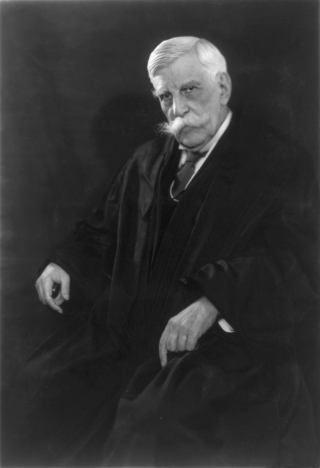
The making of a contract depends not on the agreement of two minds in one intention, but on the agreement of two sets of external signs—not on the parties having meant the same thing but on their having said the same thing.
The dissent points to ongoing negotiations between the parties.
After Souders made his initial offer, Suarez’s counsel contacted Souders’ counsel and asked that the settlement agreement provide that the lien issued by the workers’ compensation carrier (Guarantee Insurance Company) be paid from the proceeds of the settlement check.”
Despite Souders’ rejection of this proposal, Suarez filed its notice of acceptance but issued a settlement check that designated, Souders, his attorney, and Guarantee as payees. When we take these negotiations into account, it is easy to see why the trial court, appeals court, and dissent all contend that the parties had not actually agreed on the terms of their settlement. At the time that the parties “agreed” to their settlement, the allocation of the settlement payment among the payees had yet to be determined.
The dissent points out that Florida Rule of Civil Procedure 1.442(f)(1), which the majority treats as barring the evidence of on-going negotiations, assumes a valid offer and acceptance. However, the dissent contends, there had been no valid offer and acceptance here, where the parties had not agreed on who was to be the payee on the settlement check. And this ambiguity now helps us understand why the dissenters fear that a boilerplate submission that conceals a continuing disagreement between the parties as to fundamental element of the settlement could permit an offeree to change the terms of the agreement unilaterally. Where the trial court to approve payment to the insurer, it might actually be imposing on the settlement offeror a term to which it did not agree.
Whether of not enforcing the settlement agreement in this case would in fact change the terms of the offer is addressed satisfactorily only in a two-Justice concurring opinion. There, Justice Canady takes note of the relevant statutory scheme that seems to require that the workers compensation carrier’s lien be taken into account in any settlement. Under Florida’s Workman Compensation Statute § 440.39, “Souders was required by law to bring his third-party tort claim not only for his own benefit, but also for ‘the use and benefit’ of the workers’ compensation carrier.”
Under the concurring opinion’s view of the matter, Souder must have, as a matter of law, made his settlement offer knowing that the lien would come out of the $500,000 settlement payment. Had Saurez failed to identify Guarantee as a payee, it would have been in violation of Florida’s Workman Compensation Statute. While the majority remanded the case to resolve the issue of how the $500,000 payment was to be allocated among the payees or whether Saurez had breached the agreement by naming Guarantee as a payee, the concurring opinion sees no possibility of breach, as Saurez’s conduct was mandated by statute.