
Sid DeLong, Is Prince Andrew a Third-Party Beneficiary of the Giuffre Release?
“Yes Virginia, There is a Santa Clause”: The Giuffre Release
Sidney DeLong

Denied the benefits of three years of law school, the general public must learn what it can about contract law in piecemeal fashion, in the school for scandal afforded by news reports of highly publicized cases. Thus, for example, the Stormy Daniels controversy introduced everyone to the law of mandatory arbitration, non-disclosure agreements, and temporary restraining orders.
Seen as a teaching moment, the sexual abuse lawsuit brought by Virginia Roberts nee Giuffre against Prince Andrew may further educate the laity about the arcana associated with general releases and third-party beneficiary law. It also may give an incidental education in the state of legal prose.
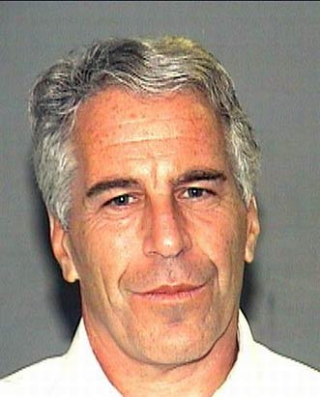
Last Monday, the court unsealed a Settlement Agreement and Release entered into by Virginia Roberts (Giuffre’s maiden name) and Jeffrey Epstein (below, right) in 2009. The agreement settled her lawsuit and released all her then-pending tort claims against Epstein. Her allegations included that he trafficked her, while a minor, to his powerful friends, who included politicians, academicians, and “royalty.” The Release states that it was executed in connection with a non-prosecution agreement entered into by a Florida federal prosecutor and Epstein, an agreement that was later to become controversial in itself when he was prosecuted in New York.
In her current lawsuit against Prince Andrew, Giuffre alleges that he was a friend of Epstein who sexually assaulted her on multiple occasions when she was a minor. Without admitting any of her allegations, he has pleaded as an affirmative defense that she released her claims against him when she signed the Epstein release, even though he was not a party to the Epstein lawsuit and is not named in the release. Instead, he claims that he is an unnamed third-party beneficiary of the release because it extends to “any other person or entity who could have been included as a potential defendant” to the Epstein lawsuit.
The Settlement Agreement and General Release contains language that, although it is boilerplate familiar to many litigators, would strike most laypersons and many lawyers as bizarre. Like many other forms of contractual boilerplate, release boilerplate grows by accretion and never seems to diminish. As a result, it contains many terms that have no application to this controversy.
Thus, the agreement binds not only Giuffre and Epstein in the singular, but also in the plural:
Virginia Roberts and her agent(s), attorney(s), predecessor(s), successors(s), heir(s), administrator(s), and/or assign(s)/(hereunder, “First Parties”) and Jeffrey Epstein and his agent(s), attorney(s), predecessor(s), successors(s), heir(s), administrator(s), and/or assign(s)/(hereunder, “Second Parties”).
All this means that in form the agreement is between two large groups of people, real and imaginary. More significantly, the agreement also refers to a third group of unnamed persons: “any other person or entity who could have been included as a potential defendant (“Other Potential Defendants”).
The First Parties not only “release“ the Second Parties and the Other Potential Defendants from the Giuffre claims, but also “remise, release, acquit, satisfy, and forever discharge” them.
When the drafter(s) entitled the document a “General” release they were not kidding. The released claims include not only the tort claims Giuffre brought against Epstein in the lawsuit, but also (take a deep breath)
all, and all manner of, action and actions of Virginia Roberts, including State or Federal, cause and causes of action (common law or statutory), suits, debts, dues, sums of money, accounts, reckonings, bonds, bills, specialties, covenants, contracts, controversies, agreements, promises, variances, trespasses, damages, judgments, executions, claims, and demands whatsoever in law or in equity for compensatory or punitive damages that said First Parties ever had or now have or that any personal representative, successor, heir, or assign of said First Parties hereafter can, shall, or may have, against Jeffrey Epstein, or Other Potential Defendants for, upon or by reason of any matter, cause, or thing whatsoever (whether known or unknown), from the beginning of the world to the day of this release.
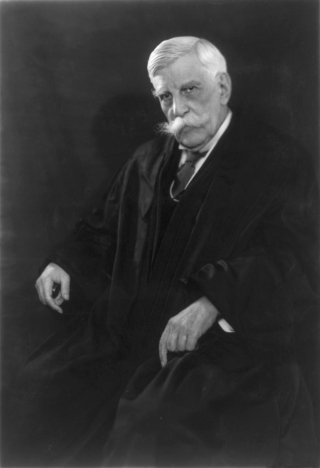
For a unique experience, legally trained readers may, for once in their professional life, actually read this passage word-for-word, preferably aloud, and reflect on its meaning. They might then reflect on the fact that no living person fully understands every word of this paragraph. Non-lawyers may be surprised that, as Holmes famously remarked, the law finds no difficulty under the objective theory of contract in holding parties to the terms of agreements that neither of them may correctly understand.
If we had world enough and time, it would be highly rewarding to parse this language, lingering lovingly over each word, imagining what drafting disaster in what ancient agreement led to its inclusion in the ever-growing, immortal mass that is the result. Does anyone remember what a “specialty” is? What “variances” might Epstein have committed against Giuffre, assuming one can commit a variance?
Sadly, courts do not always ignore such boilerplate. In the infamous decision, Hershon v. Gibraltar Building & Loan Assoc., Inc., 864 F.2d 848 (D.C. Cir. 1989) a general release with even more extravagant language that was intended only to settle five business claims was held to have inadvertently cancelled a debt of $265,000 owed by the released party to the releasing party in a completely unrelated and uncontested loan.The majority rested on a rather punitive application of the plain meaning theory of contract, visiting the sins of the drafters on their clients. Under Hershon’s reasoning, the Giuffre release would discharge any claim of any sort that she might have had against anyone who might have been a “possible defendant” in her action against Epstein, such as his insurer.
There were easily-imagined reasons for Epstein’s lawyers to employ the ambiguity so as not to name the “powerful friends” that Epstein wanted to shield with this settlement. But in this case, professional coyness might encourage a court sympathetic to the plaintiff to refuse to read their names into the agreement.
A final question is whether a release can be a “third-party beneficiary contract.” First, a release is not a contract as the Restatement defines it because, as Restatement (Second) of the Law: Contracts § 278, cmt. c acknowledges. A release is not a promise that creates rights and duties but instead extinguishes rights and duties. But there is no reason the Release may not be construed to extinguish claims against third parties if that is the intent. Protection of third parties is common in tort settlements.
Under Restatement (Second) of the Law: Contracts § 302, a third party may enforce a promise whenever the promisee manifests an intention that third parties have enforcement rights and that they are appropriate to achieve the promisee’s purposes. If Epstein intended to give the unnamed friends the benefit of the release, it should be “enforceable” by those third parties if the court resolves the issue noted above as to their identity.
Two things raise doubts about whether Epstein manifested an intent that Andrew be able to enforce the release. First, the release seems not to have been disclosed to Andrew until discovery in the pending case. Than alone argues against Andrew being an intended third-party beneficiary.
A second, related doubt about third party rights arises from the following term.
Additionally, as a material consideration in settling, First Parties and Second Parties agree that the terms of this Settlement Agreement are not intended to be used by any other person nor to be admissible in any proceeding or case against or involving Jeffrey Epstein, either civil or criminal. (emphasis added).
Is Prince Andrew an “other person” who is trying to “use the terms” of the agreement? Or does the term “other person” not include the previously mentioned “Other Potential Defendants”? Does the phrase “in any proceeding or case against or involving Jeffry Epstein” modify the clause limiting the intended use by other persons, so that Prince Andrew may argue that he may use the release because this is not a case “against or involving” Epstein?
What lessons might the public learn from this combination of verbal overkill and under-specificity in Settlement Agreement and General Release? Perhaps that lawyers are paid by the word rather than the thought.