
What’s the Sound of a Contract Falling in an Alaskan Forest?
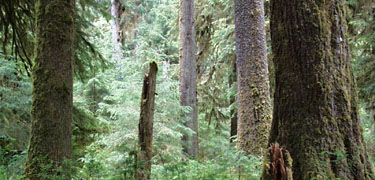
There have been political differences over the treatment of the forests for decades, with Alaska’s Republican leaders and the timber industry on one side and environmentalists, Alaska Natives, and the Clinton and Obama administrations on the other. About half of Alaska’s old-growth forests have been harvested since the 1950s. During that time, the amount of carbon dioxide in the atmosphere has risen from 315 parts per million to 412.5 parts per million. When the Sitka spruce first sprouted in the Alaskan soil in the sixteenth century, the amount of carbon dioxide in the atmosphere stood at 282 parts per million.
The Trump administration, supported by Alaska’s Senators, promoted a return to old-growth timber harvesting that would have doomed the 500-year-old Sitka spruce that is at the center of the WaPo story. The Biden administration has since intervened, and the Sitka spruce has been granted a stay of execution. Biden’s Agriculture Secretary, Tom Vilsack, announced that there will be no more old growth harvesting in the Tongass National Forest except by Alaska Natives and small local operators.
And so a contract fell in the woods. Did it make a sound?