
Jokes and Their Relationship to Teaching
Humor plays a large role in my classroom. I get a great deal of pleasure out of making people laugh. Recently, I sat in a chair as a man got down on one knee to administer my third COVID-19 vaccine. I asked him why they didn’t at least give him a chair as well, and he told me that he preferred to kneel because it gave him the best angle. As he furrowed his brow in concentration, I asked him if anybody had jumped up from the chair and accepted his marriage proposal before he got a chance to administer the injection. I didn’t think it was my best material, but he exploded with laughter. As he had been so serious up until then, it caught me off guard. He regained his composure, administered the shot, and then returned to chuckling a bit before reverting to his wonted professional demeanor and calling his next customer. I was happy about getting vaccinated and happy to see my fellow Oklahomans doing the same, but his laughter was what really made my day.
Laughter also serves a pedagogical purpose. My attempts at humor or humorous exchanges with students break up the tedium of a 75-minute class session. Humor also creates a sense of community. If we all are in on the joke, we have common sense of reference, and building a sense of community is an important thing to do in the 1L classroom. I’ve read that singing together is a great way to build community. I wish I could get my students to sing together. Some day. Jokes have the added benefit that a joke related to thematic material can help the students remember the material, just as a case with colorful facts helps tether the legal rule to the facts out of which it arose. Song lyrics that help students remember doctrine could be a real boon. Some day.
However, I have learned from hard experience that jokes have no place in law exams. Humor can create a sense of community, but it can also make students who don’t get the joke feel isolated. That feeling should be transient in the classroom, as students can always ask their neighbors “What’s so funny?” and in any case, the stakes are low. Still, the humor should arise organically from the conversation and assume as few points of reference outside of the classroom as possible. I used to routinely refer to my favorite comedies in the classroom, but I can no longer assume that my students and I will share the same frame of reference.
But on an exam, where students are trained to think that every word in the fact pattern is there for a reason, making a joke is not a good reason to include words in a fact pattern. In class, I make a joke about the relationship between UCC § 2-201 and UCC § 2-207. I tell the students that in § 2-207, we assume that parties do not routinely read forms. In § 2-201’s merchant exception, we assume that they do, and so merchants cannot rely on the Statute of Frauds to get out of an oral agreement if they received written confirmation of that agreement and did not respond within ten days. “How do we explain the tension between these two provisions?” I ask. One possible answer, I suggest, is that Karl Llewellyn had two heads, and I then show this image and try to persuade the students that it is a picture of Karl Llewellyn:
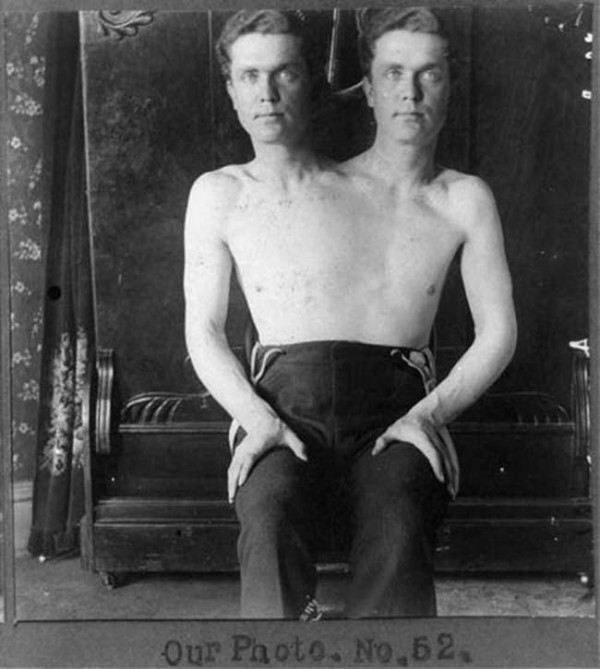
Well, I used to use it. Now I use an image from The Matrix in which Neo is fighting with an Agent and it looks like they only have one torso between them. I allow myself the reference to outside materials because the image is amusing whether or not you’ve seen the movie.
And we all have a good laugh/I break out in flop sweat and wait for the awkward silence to dissipate into confused murmurings. But then I explain that no, Karl Llewellyn did not have two heads, and there is no contradiction between § 2-201 and § 2-207. Merchants read forms. They need to know what orders they have to fill and when those orders are due to be filled. They check quantity, and they might check price. But they don’t look at the non-salient terms that are the stuff of § 2-207 fights, or so Karl Llewellyn plausibly reasoned.
On an end-of-term set of practice multiple-choice questions, I included the following:
Which of the following is (are) true?
- The UCC’s Statute of Frauds provision (§ 2-201) seems to assume that merchants read confirmations.
- The UCC’s Battle of the Forms provision (§ 2-207) seems to assume that merchants do not read form contracts
- I and II are both true because Karl Llewellyn had two heads.
- Only I
- Only II
- I and II
- I, II and III
The answer I was looking for was c. The most popular answer by far was d. I don’t think my students think that Karl Llewellyn had two heads. I think they think I want them to pick that answer, but I’m not sure why they think that. This question is now officially retired.