
John Deere Tractors and Contracts of Adhesion Have Farmers Shouting “Hay!”
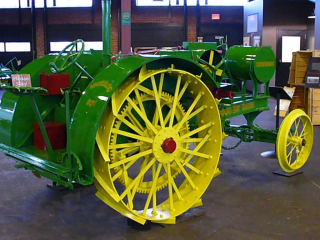
The point is, his tractor broke down, and Schweitzer couldn’t fix it because he did not have access to software that would have enabled him to diagnose the problem. Who did have access to the software? John Deere, and only John Deere. Schweitzer eventually had to take the tractor to the dealer, which kept it for a month and charged him $5000 for a faulty fuel sensor that a local mechanic could have replaced for a fraction of the price.
The problem is that modern tractors are extraordinarily sophisticated machines that cost upward of $200,000, but when you buy such a tractor, you are only buying the machine itself. The manufacturer retains ownership of the software. Farmers have been lobbying for access to the software, and the manufacturers promised to make it available, but . . . so far nothing.
Enter state legislatures with a possible solution to the problem: so-called right-to-repair bills, which require the manufacturer to share software with the farmers. So far, these bills, although introduced in 12 states, have uniformly failed because of concerns that they might cause safety risks and environmental harms. Farmers are trying to hack into their machines to access the information they need, or they are going retro and buying old tractors that work without all the software.
Meanwhile, there’s more bad news as reported in this article on Vice. The tractors compile data on their use. The upside is that the manufacturers can share the data with the farmers who use the tractors in order to help the farmers maximize their yields. The downside is that the farmers have no way to know what data is being collected, with whom it is being shared, and for what purposes it is being used.
According to the article (which is from 2018 but likely is still accurate),
The John Deere EULA, which a farmer automatically agrees to by turning a key on their equipment, not only forbids repair and modification, but also protects the company against lawsuits for “crop loss, lost profits, loss of goodwill, loss of use of equipment arising from the performance or non-performance of any aspect of the software.”
The article highlights other problems, such as:
- The machines can cost $500,000 or more; the farmers can’t afford them so they lease them, often from the manufacturer;
- The manufacturer may learn form Apple and plan the obsolescence of these machines, simply by not updating the software;
- Manufacturers could remotely shut down equipment if they think farmers are violating the EULA by, for example, engaging in self-repair; and
- If the farmers can hack into their machines’ software systems, others might do so as well with malign intent.