
Virtual Symposium Part VII: Ben Davis on the Wisdom of Wisdom-Tooth-Extraction During a Pandemic
Selling out the ordinary citizen: COVID-19 Limitation of Liability
Benjamin G. Davis, University of Toledo College of Law
I. The Wisdom of Fixing My Wisdom Teeth in a Pandemic
This is a dental story about wisdom teeth.
This past July I had my son over with a couple of friends to grill steaks. When it got dark, we went inside to finish the meal. 15 days later I learned that one of those friends might have been exposed to COVID-19. So I immediately set up to be tested three days later. And I called my dentist to reschedule my upcoming appointment because I was not sure if I had been exposed and was getting tested. Fortunately, another week later the test came back negative.

So I went to my rescheduled dentist appointment in early September and one of the conclusions was that my wisdom teeth needed to be removed. And I was referred to a maxillo-facial surgeon for that. In the first meeting I was asked to sign a document entitled COVID-19 PANDEMIC DENTAL TREATMENT AND ACKNOWLEDGEMENT OF RISK FORM. I posted that document to the Contracts listserv.
That document – as a contractual matter was saying that I was assuming the risk of contracting COVID-19 in this treatment.
III. Enter State Limitation of Liability Law
On Friday, September 19, 2020, I am to have the first of two wisdom teeth surgeries under general anesthesia.
And today I learn that the governor has signed Ohio legislation that would grant employers state law immunity from COVID-19 related civil lawsuits. As reported in the National Law Review,
Ohio employers will likely soon enjoy greater legal protections when it comes to their efforts to stem the spread of COVID-19. Acknowledging the legal uncertainties faced by essential workers and businesses in the wake of reopening, the Ohio Senate on September 2, 2020, passed House Bill (H.B.) 606, a measure which, if signed into law (and it is expected that Governor Mike DeWine will sign the bill very quickly), would grant state-law immunity from civil lawsuits for “injury, death, or loss” related to “the transmission or contraction” of the novel coronavirus. The bill specifically provides that public health orders issued by the executive branch (i.e., the governor and the Ohio Department of Health), as well as public health orders issued by federal government agencies, counties, local municipalities, and boards of health or public health agencies, do not create new legal duties for purposes of tort liability. The bill and its corresponding protections will be retroactive to the date of the declared state of emergency in Ohio, March 9, 2020, and will expire on September 30, 2021.
The bill significantly limits legal exposure to Ohio businesses, which, absent a showing of reckless, intentional, or willful or wanton misconduct, would not be liable to customers, employees, or others for actions or omissions resulting in the exposure to, or transmission or contraction of, COVID-19. The bill, which is expansive, extends protections to all Ohio entities, including schools, nonprofit and for-profit entities of any size, governmental entities, churches, colleges, and universities.
Subject to limited exceptions, the new law would also shield health care providers from liability in tort actions arising from the “provision, withholding, or withdrawal” of health care services resulting from the coronavirus pandemic. The bill does not provide total protection; plaintiffs who can prove a health care provider acted with “reckless disregard for the consequences” of their actions, or engaged in “intentional misconduct or willful or wanton misconduct” could still recover.
In addition to the above protections, the bill would flatly bar class actions based in whole or in part on allegations that a health care provider, business, government entity, or person caused “exposure to, or the transmission or contraction of” COVID-19.”
As reported on Patch.com, Andrew Doehrel, president and CEO of the Ohio Chamber of Commerce said, “Ohio businesses stepped up when asked to help with this pandemic crisis and we are pleased that the Senate and House, along with the governor, have acted to help protect jobs and our economy,”
The story continues:
Health care providers are also protected from liability in tort actions related to COVID-19 care and services under the law. Again, anyone looking to sue a health care provider would have to prove they were acting recklessly or displaying intentional misconduct.
IV. What if I were to get COVID-19 in this wisdom tooth operation?
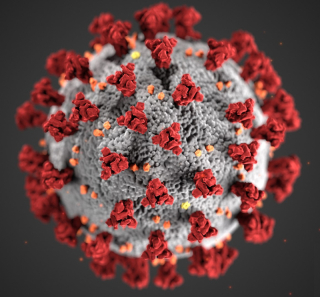
If I were to assert a breach of contract or tort claim, given that the operation is two days after the passage of the above law, the bar for my getting any relief for COVID-19 illness contracted in that operation and even for a death from it (I hope not, egads) has been significantly raised by this law.
And there will be a second wisdom tooth operation in the future where the same issue would arise for that operation too.
I could walk into the operation wearing my “Everybody Say, Corona Virus Don’t Play” t-shirt as a kind of new offer that if they operate on me and I contract COVID-19 from it, the surgeon is assuming that risk. But, that might be a bit too ambiguous. So maybe I should make up a t-shirt like Ian Ayres once suggested in Guerilla Consumerism that says, “Notwithstanding any other document or legislation, by serving me in any manner you waive any rights or defenses that you may have with respect to any legislation or contractual or other document that limits your liability to anything below the liability that you would have had before the COVID-19 pandemic.”
That is a bit long to put on a t-shirt but maybe I could get it done in very small print that was big enough for them to see, but small enough that they skip over reading it. Maybe I could put the words NOTICE in big letters to attract their attention.
V. Been warning about this kind of thing since April.
Pernicious contractual waivers to address a systemic risk that is a pandemic, I have warned, are not a solution to risk. Nor is this type of legislation. All these things do is shift the risk to the individual and away from employers. They do nothing to address the underlying problem, which is the COVID-19 pandemic.
So we have a combination of market failure and state government failure in betraying the public trust by getting employers off the hook for COVID-19 liability.
It is all of a pattern of repression and weaponizing COVID-19 that I have described in a number of articles since April
- We Should Be Concerned with COVID-19 Vaccine Corner-Cutting, JURIST – Professional Commentary, September 1, 2020
- Force Drift: Thuggery in Portland with Toxic Mission Creep using Mystery Men, JURIST – Academic Commentary, July 23, 2020
- The Business of Reopening Colleges and Universities in a Pandemic, JURIST – Academic Commentary, July 7, 2020
- The Insanity of Using Riot-Control Chemical Agents on Peaceful Protesters in the Middle of a Pandemic, JURIST – Academic Commentary, June 9, 2020
- More Worker Endangerment: Pernicious COVID-19 Contractual Waivers, JURIST – AcademicCommentary, June 2, 2020
- An Open Letter to the Congressional Leadership on COVID-19 Limited Liability for Universities, JURIST – Academic Commentary, June 1, 2020
- How Covid-19 Human Endangerment Might Be Approached as a Domestic Crime or an International Crime Against Humanity, JURIST – Academic Commentary, May 20, 2020
- Worker Endangerment in the Meat Industry During COVID-19, JURIST – Academic Commentary, April 30, 2020
- (With William H. Widen), No Market Solution for Black Death: COVID-19 Guidelines As Crime, JURIST – Academic Commentary, April 18, 2020
VI. So what does one do?
A state constitutional, federal constitutional, or international law challenge of these kinds of approaches are something that I think I should think about. But, in the meantime, I have to get this wisdom tooth out.
The systemic failures of the federal, state, and business communities to do what was and is needed to protect the ordinary citizen are appalling and criminal. And, ordinary citizens, like me are left to the dogs of COVID-19 – air-borne, relentless, and many times deadly.
No wonder the United States is the butt of jokes around the world such as the following:
Q: What borders on insanity?
A: Canada and Mexico.