
Contracts Issues in Trump v. Trump (Sup. Ct. Dutchess Co., July 13, 2020)
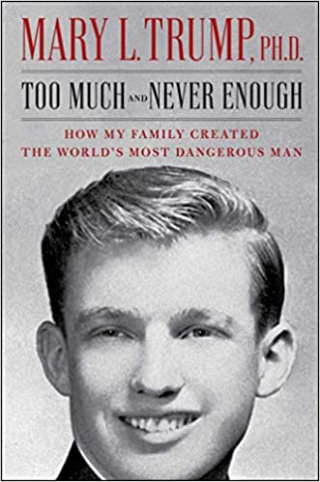
The dispute arose out of a 2001 stipulation, ending lawsuits related to the estate of Fred Trump. The court assumed arguendo that the stipulation should be treated as a contract, and that assumption seems well-supported in New York’s case law relating to such stipulations. The stipulation includes a confidentiality clause. However, it is not clear that the clause was to cover anything beyond the matters in dispute in the estate litigation. Moreover, Justice Greenwald observes, “the clause is so overly broad, as to be ineffective.”
The court finds that no action based on the stipulation can stand against the book’s publisher, which was not a party to the stipulation and is not Mary Trump’s agent. As to Mary Trump, the court applied a three-part test for the granting of a preliminary injunction: a showing of likely success on the merits; a showing of irreparable harm; and a balance of equities favoring the plaintiff.
The case was brought by Robert Trump, the President’s brother, and the complaint identified no particular harm to Robert Trump that would follow from the publication of the book. The court accordingly found that plaintiff could not show that he would likely succeed on the merits of his claim. Because it was his burden to produce “clear and convincing evidence,” Plaintiff did not help his cause by averring that he did not know the contents of the book. As King Lear put it in a similar context, “Nothing will come of nothing.”
The court’s discussion of irreparable harm is more extended, but there too, plaintiff does not fare well. Plaintiff wants to construe the contract as stipulating that breach of the confidentiality agreement would constitute irreparable harm entitling plaintiff to injunctive relief. The court reiterates its skepticism regarding whether the non-disclosure agreement reached the contents of Mary Trumps book and notes that one cannot contract for equitable relief. The court’s reasoning here is also colored by Judge Greenwald’s conviction that the non-disclosure agreement was overbroad, as it lacked temporal, geographic, or subject-matter limitations.
As to the balance of equities, Robert Trump could say very little about his equitable interest in seeking an injunction, and the public interest in Mary Trump’s book seems to be significant. Moreover, the court was persuaded by Mary Trump’s brief, which highlighted our constitutional aversion to prior restraints on speech. Moreover, the book is out, and so the injunction is moot. Unable to resist the play on the parties’ shared name, the court concludes: “Con. Law trumps Contracts”.