
Guest Post by Charles Calleros, Talking about Race in the Contracts Course: Interface with Civil Rights Laws, Part II – Consideration

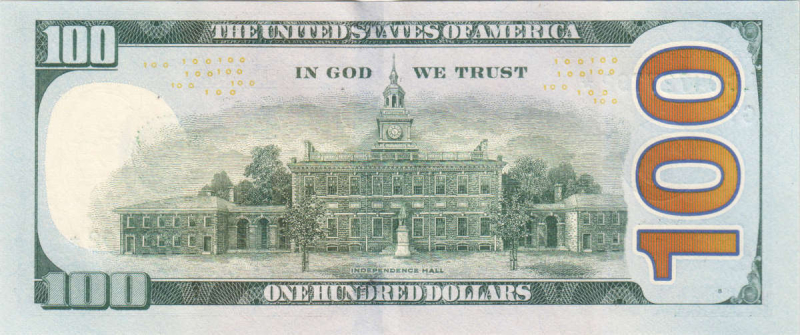
In another case applying section 1981, the court analyzed a different element of contract formation: consideration. Barfield v. Commerce Bank, N.A., 484 F.3d 1276 (2007). Thwarting mutual assent was not in question because Barfield, a Black man, entered a bank and offered to exchange his large bill for smaller bills. The bank refused this service on the pretext that Barfield did not have an account with the bank, a requirement not imposed on White passersby who asked to change a large bill. The court describes how Barfield confirmed the bank’s discriminatory policy by running tests with his father, a White friend, and a White reporter.
Notwithstanding this proof, the court could not apply section 1981 unless Barfield was offering to make a “contract,” which would require consideration. The element of consideration in question, it seems, was reciprocal inducement, specifically whether the bank was induced or whether the bank was simply performing a gratuitous service. Barfield was certainly induced by the prospect of giving up a large bill in exchange for the equivalent in several smaller bills, which are easier to use in most transactions. But was the bank induced to give up smaller bills in exchange for a large one from someone not holding an account? Although the court does not discuss this, is it possible that ending up with fewer, larger bills at the end of the day makes for easier storage and accounting? The court adopts a more interesting explanation: the bank is induced by the prospect that some non-account-holders, stopping initially only to get change, will be impressed with the bank and decide to open accounts and pay the accompanying fees. The Bank apparently didn’t have the nerve to argue that the prospect of attracting Black customers did not provide the same inducement as did foot traffic by White customers, and the court found it unnecessary to parse inducement to that degree. If not for Barfield’s race, Barfield’s offer would have resulted in a contract.
I like to teach Barfield for several reasons:
- It is short – much shorter than Gregory v. Dillard’s – and thus easily assigned and discussed.
- It reveals racial discrimination in what should be a common, perfunctory transaction. (How many times have we heard a shopkeeper, when asked to change a bill, respond, “We’re not a bank,” as though a bank is indisputably the right place to get change?).
- The racial discrimination appears in a legal context – consideration – that infrequently addresses race and thus injects some additional relevance to our study of that arcane subject.
- The racial discrimination is so clearly confirmed by Barfield and so explicitly set forth in the opinion that one does not need additional materials or inference to find racial discrimination.
- The case is relatively recent, so the discrimination cannot be dismissed by any student as a relic of the past but is a reminder of persistent and pervasive discrimination in our society, from commercial dealings to criminal justice.