
Gilmore Girls, Netflix, Derivative Works, and Contracts in a Changing Television Landscape
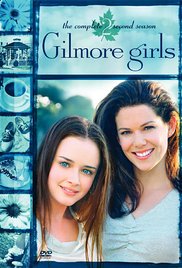
(image from IMDB)
Gilmore Girls fandom rejoiced when it was announced that the show would receive a revival on Netflix (and, even better, that it will include Sookie!). But, as often seems to be the case, developments that bring a fandom joy can come with legal entanglements. In this case, producer Gavin Polone’s production company Hofflund/Polone has filed a lawsuit against Warner Bros., alleging breach of contract. The lawsuit, Hofflund/Polone v. Warner Bros. Television, Case No. BC616555 (behind paywall), was filed in the Los Angeles County, Central District, Superior Court of California.
The case revolves around the agreement between the parties concerning the original production of Gilmore Girls. The parties agreed, according to Hofflund/Polone, to provide Hofflund/Polone with “$32,500 for each original episode of Gilmore Girls produced in any year subsequent to 2003,” along with some percentage of the gross and with “executive producer” credit. With the news of the recent Netflix revival, Hofflund/Polone allegedly reached out to Warner Bros. seeking compensation under the agreement. According to the complaint, Warner Bros. took the position that the Netflix version of Gilmore Girls is a derivative work based on the original series, and so therefore does not trigger compensation to Hofflund/Polone.
It’s an interesting question that highlights one of the debates copyright scholars have: What, exactly, is a “derivative” work? Copyright owners have the exclusive right to reproduce their own works or works substantially similar to those works. They also have the right to produce derivative works based on those works, which, in the jurisprudence, has ended up using the same substantially similar standard to elucidate the “based on” language. Which means: what is the point of the derivative work right, if its standard seems the same as the reproduction right? This case has the potential to force confrontation with that problem: Where do we draw the line between infringement of the reproduction right and infringement of the derivative work right? When does a substantially similar work cross the line between reproduction and derivative work?
One thing that’s been noted about the derivative work right is it tends to be talked about when there’s some kind of change in medium or other kind of adaptation different from the original form (book to film, or translation from one language to another). The definition in the statute points us to that focus. Which raises the question: Is a Netflix revival more like a translation or adaptation of Gilmore Girls than it is like an exact copy of Gilmore Girls? Does this depend on how true it is to the original show?
The “television” landscape has shifted dramatically since Gilmore Girls premiered. It’ll be interesting to see how contracts formed pre-Netflix-and-Amazon-production-era function going forward.