
Are We Missing (Some of ) Our Target Audience(s)?
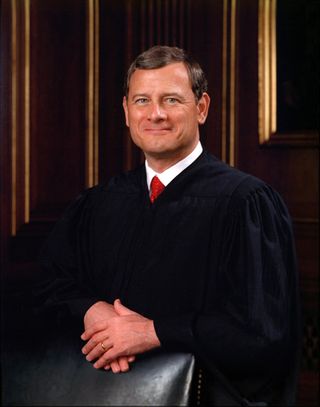
Pick up a copy of any law review that you see, Roberts said, and the first article is likely to be, you know, the influence of Immanuel Kant on evidentiary approaches in 18th-century Bulgaria, or something, which I’m sure was of great interest to the academic that wrote it, but isn’t of much help to the bar.
We will assume that the Chief Justice is exaggerating for effect, as he must have rubbed shoulders with enough academics to know that very few law professors are very much interested in Kant’s views, the 18th century or Bulgaria. Still, it is true that most academics do not write with courts or even practitioners in mind. While we might hope to have some sort of long-term effect on policy, I think most of us write in conversation with each other and with our students. Scholarship is often inspired by Supreme Court decisions that, in the opinion of the author, have strayed from wise policy, precedent or both. It is no surprise that the author of such opinions would find such scholarship tiresome.
While perusing the blog of one of this blog’s readers, Kenneth A. Adams, I came across the following:
Every so often I glance at ContractsProf Blog’s regular “New in Print” posts (e.g., here) and “Weekly Top Tens from the Social Science Research Network” posts (e.g., here). So far, I haven’t been tempted to read any of the law review articles listed, because I haven’t seen anything that seems as if it treats, in a compelling way, what you should say in a contract, or how you should say whatever you want to say.
I think I would have to agree with everything after “because”, but I also find it hard to imagine why anybody would write a law review article about this topic, given that there are practical books on contracts drafting (including one by Kenneth A. Adams). I have a hard time trying to articulate why this subject is not an attractive topic for a law review article but an eminently sensible book project. I have occasionally heard colleagues disparage law review articles as “mere practitioners’ notes.” Heaven forfend that my work ever be so labeled, but it is a real danger, as I’m not sure how one makes the determination.
It also occurs to me that I read law reviews occasionally when clerking for my judge and when researching constitutional issues for my firm’s Supreme Court appellate practice but never (that I recall) while litigating contracts disputes. Should we academics be making more of an effort in this area?
[JT]