
What Happens When the Buyer of an Apartment Dies Between the Contract of Sale and Closing?
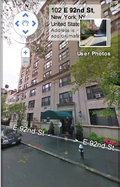
The court reasoned:
The crux of this matter lies incontract paragraph 15.2, which expressly makes the contract binding on theparties’ “heirs, personal and legal representatives and successors ininterest.” The inclusion of this provision indicates that the partiesexplicitly contemplated, and provided for, the possibility of either party’sdeath before closing, by specifying that the death would not terminate thecontract, but that the contract would survive, to be performed by thesuccessors or heirs of the deceased party. This provision makes the contractbinding on [the buyer’s] estate.
While a contract for personalservices is terminated by the death of the servant (see Minevitch v.Puleo, 9 AD2d 285, 287 [1959]), a contract of sale is not terminatedby the death of the purchaser. On the contrary, as a general rule,
“[w]here the proposedpurchaser dies before the closing of title, his executor or administrator maypay the balance of the purchase price and take the deed in his own name holdingit in trust for the heirs at law or devisees. It is the duty of the fiduciaryfor a deceased vendee to complete payments under a contract entered into bysuch vendee for the purchase of real property” (4-35 Warren’s WeedNew York Real Property §35.24 [2009] [footnote omitted]; see Di Scipio v.Sullivan, 30 AD3d 660 [2006]).
What about frustration of purpose? No dice:
We also reject [the estate’s] contention that [buyer’s] death before closing justifies nonperformance underthe defense of either impossibility or frustration of contract.
“Impossibility excuses aparty’s performance only when the destruction of the subject matter of thecontract or the means of performance makes performance objectively impossible.Moreover, the impossibility must be produced by an unanticipated event thatcould not have been foreseen or guarded against in the contract” (Kel Kim Corp.v. Central Mkts., 70 NY2d 900, 902 [1987]). Paragraph 15.2 of thecontract conclusively disproves the theory’s applicability here. [The estate relies] on a case in which the very subject matter of the contract was destroyed,making performance impossible (see Stewart v.Stone, 127 NY 500 [1891]). However, where performance is possible,albeit unprofitable, the legal excuse of impossibility is not available (see407 E. 61stGarage v. Savoy Fifth Ave. Corp., 23 NY2d 275, 282 [1968]). Theother cases [the estate relies] on for application of the impossibility defense arealso not on point.
Similarly, although at first blushthe general definition of “frustration of contract purpose” wouldseem to suit these circumstances, closer examination reveals that the defense cannotbe applied here. “In order to invoke the doctrine of frustration ofpurpose, the frustrated purpose must be so completely the basis of the contractthat, as both parties understood, without it, the transaction would have madelittle sense” (22A NY Jur 2d, Contracts §375). Since it is agreed that [the buyer] was purchasing the apartment solely for her own residence, her deathwould, by this definition, frustrate the purpose of the contract. However,”the doctrine of frustration of purpose…is not available where the eventwhich prevented performance was foreseeable and provision could have been madefor its occurrence” (Matter ofRebell v. Trask, 220 AD2d 594, 598 [1995], citing 407 E. 61stGarage, 23 NY2d at 282). Since the contract actually made explicitprovision for the event of either party’s death, the doctrine is not availablehere.
Looks like the sellers ended up getting $2,125,000 fromanother buyer.
Warner v. Kaplan (N.Y. App. Div. 1st Dep’t Dec. 10, 2009).
[Meredith R. Miller]