
Lack of Due Diligence or “Act of God”?
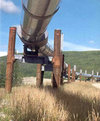 The Alaskan Prudhoe Bay oil field — the biggest oil fieldin the
Exxon Mobil and ConocoPhillips each have a roughly 36% interest in the oil field; minority owner BP has 26%share and operating and maintenance responsibilities. Today’s New York Times has an AP article reporting that Exxon Mobil and ConocoPhillips are apparentlyattempting to invoke a force majeure clause to be excused from any responsibilitiesto oversee BP’s maintenance of the oil field. The companies apparently argue that they were surprised to hear thepipeline was corroded and the state of the pipes was beyond their control.
Engineering Professor Michael J. Economides of the
Yes, they had no choice but to invoke force majeure, but they depend on BP’sdue diligence, which in my estimation has been questionable. . . . I don’t likethe statement that BP was surprised by the corrosion[.] A company that size should have first-rateengineers and managers. We don’t like surprises in my business, and good duediligence precludes all of these things.
However, J. Lanier Yeates, an oil and gas attorney in Houston, told the APthat energy companies typically account for problems like corrosion in theircontracts with clients, suppliers and royalty owners (here, the State ofAlaska). He stated that the forcemajeure clauses in these contracts are designed to cast a wide net and oftenuse a very general set of criteria. Hecommented:
I expect the provisions in the contracts that apply here are broad enough toinclude these kinds of problems from the wear and tear and corrosions anddeterioration of the pipes. . . . I would be greatly surprised if there weren’tcontractual provisions that relate to damages to the pipeline.
Professor Patrick Martin of LSU Law
There are often questions raised as to whether one could have taken steps toavoid circumstances they claim to be force majeure. . . . But my guess is, youwon’t see it out of this. . . . I don’t think ConocoPhillips or Exxon Mobilcould be tagged with breach of contract if the oil is not available to them.
Even assuming a broadly cast force majeure clause, should ConocoPhillips and Exxon Mobil be excused from liability because the corrosion was beyond their control or, rather, is this a serious failure of diligence for which they should be liable?
[Meredith R. Miller]