
Today in history–January 23
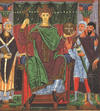 1002: Emperor Otto III (left), the man who came closest to creating a single church/state imperial entity in the West, dies shortly after being driven from Rome by a popular uprising.
1533: Anne Boleyn, the mistress of King Henry VIII, discovers that she is pregnant; she will secretly marry the king two days later, prompting him to go forward with his divorce of Queen Catherine and leading ultimately to a Protestant England. She will herself die when the only child she can produce is a girl, who is named Elizabeth.
1556: The worst earthquake in history occurs, as some 830,000 people are killed in China. Complaints about the inadequacy of America’s response follow.
1571: Anne Boleyn’s daughter, Queen Elizabeth I, officially opens the Royal Exchange. The Exchange, founded by the Corporation of London and the Worshipful Company of Mercers, has been in business since 1565, but Elizabeth’s act gives it a royal charter.
1766: William Caslon, the man who made book type design and manufacture a business, dies. The typeface that bears his name will later be used for the first printings of the United States Constitution.
1789: Georgetown University, the first Roman Catholic university in the United States, is founded.
1851: Two factions in an Oregon city who have very little imagination flip a coin to decide whether to call the place “Boston” or “Portland.” “Portland” wins.
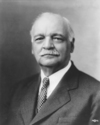 1860: Charles Curtis, the first Native American to serve in the U.S. Senate, is born in Topeka, Kansas. After spending some of his youth on the Kaw Reservation, he will be admitted to the bar and begin practice in Shawnee County, Kansas. In 1928 he will be elected vice president of the United States on the Republican ticket headed by Herbert Hoover.
1911: Marie Curie, who has already won a Nobel Prize, is turned down for membership by the all-male French Academy of Sciences.
1915: Potter Stewart, one of the few modern U.S. Supreme Court justices who did not have to be carried out of the courthouse at the end, is born in Jackson, Michigan, while his family is on vacation.
1944: Painter Edvard Munch dies at Ekely, Norway, far too early to profit from the royalties on his famous “The Scream.”
1964: Warren Spahn of the Milwaukee Braves becomes baseball’s highest-paid pitcher when he signs a contract for $85,000.
1964: The 24th amendment to the U.S. Constitution is ratified, prohibiting states from imposing poll taxes as a condition for voting in federal elections.
1986: Tourism in Cleveland gets a boost, as the Rock & Roll Hall of Fame inducts its first class: Chuck Berry, James Brown, Ray Charles, Fats Domino, The Everly Brothers, Buddy Holly, Jerry Lee Lewis, and Elvis Presley.
1989: Salvador Dali, the artist best-known for his pioneer work in selling expensive limited edition prints to affluent collectors, dies. “The only difference between me and the Surrealists,” he liked to say, “is that I am a Surrealist.”
2002: Libertarian philosopher Robert (Anarchy, State, and Utopia) Nozick dies after a long battle with cancer. He opposed the philosophy of John Rawls, arguing that Rawls’s taxation and redistribution treated people as means, rather than ends in themselves.